Benjamin Rush

BORN - December 24, 1745, at The Homestead in Byberry, 14 miles from downtown Philadelphia, PA. Parents (English ancestry) - John Rush (b1712-d1751) and Susanna Hall Harvey Rush (b1717-d1795). Seven Children (five surviving to adulthood) – James Rush (b1739-d1861), Rachel Rush (b1741-d1798), Rebecca Rush (b1743-d1793), Benjamin Rush (b1745-d1813), Jacob Rush (b1746-d1820), Stephenson Rush (b1749-d1750, as infant), John Rush, Jr. (b1751-d1751, as infant).
DIED - April 19, 1813(1813-04-19) (age 67), in Philadelphia, PA from Typhus Fever. Religion – Presbyterian. Member of the Second Presbyterian Church in Philadelphia. Buried – Christ Church Burial Ground, Philadelphia, PA
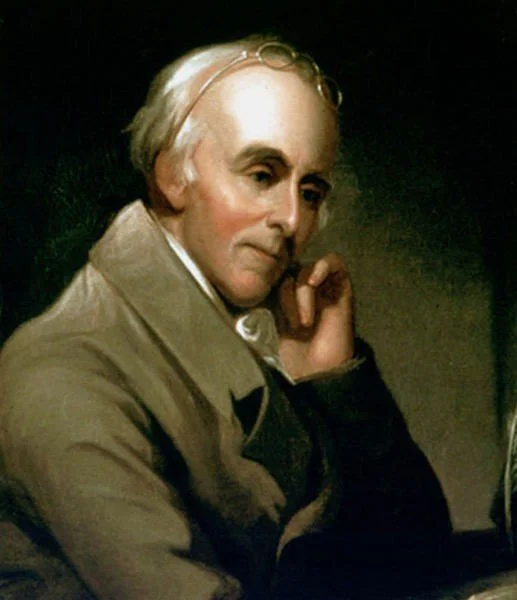
APPEARANCE – The picture above is the portrait of Benjamin Rush (age 38) painted by Charles Willson Peale in 1783. Handsome, well-spoken, a gentleman, attractive figure. Was a gossip and was quick to rush to judgment about others. Confident of his own opinion and decisions, yet shallow and very unscientific in practice.
FAMILY – Married - Julia Stockton (b1759–1848), sister of Signer John Stockton in 1776. Thirteen Children (nine survived to adulthood) – John Rush (b1777-d1837), Anne Emily Rush Cuthbert (b1779-d1850), Richard Rush (b1780-d1859), Susannah Rush (b1782-d1783, as infant), Elizabeth Rush (b1783-d1784, as infant), Mary B Rush (b1784-d1849), James Rush (b1786-d1869), William Rush, Jr. #1 (___, died as infant), Benjamin Rush, Jr. #1 (b1789-d1790, as infant), Julia Rush Williams (b1790-d1860), Benjamin Rush #2 (b1791-d1824), Samuel Rush (b1795-d1859), William Rush #2 (b1801-d1864).
OCCUPATION – PHYSICIAN, PROFESSOR, LEGISLATOR. Known as both the “Father of American Medicine” and the “Father of American Psychiatry”. Graduated from the College of New Jersey (now Princeton University) in 1760 and the University of Edinburgh in 1768. Established a medical practice in Philadelphia in 1769. Member of the Continental Congress representing Pennsylvania from 1776 to 1777. Member of the staff of the Philadelphia Hospital from 1783 to 1813. Treasurer of the U.S. Mint from 1797 until his death in 1813. Helped found Dickinson College and Franklin and Marshall College.
AT SIGNING – Age 30 at signing.
AFTER SIGNING – Continued to serve in Congress in Philadelphia until 1777. Appointed Surgeon-General of the middle department of the Continental Army in 1777. Served at the Battles of Trenton and Princeton. Was forced to flee to MD and had several narrow escapes. Campaigned for removal of George Washington as commander in chief and was confronted by Washington.
HISTORIC SITES
Hospital - Pennsylvania Hospital, Philadelphia, PA (1756). Located at 800 Spruce Street, Philadelphia, PA 19107, Phone 215-829-3000, Website www.pennmedicine.org/pahosp. Dr. Rush was a member of the staff of the Philadelphia Hospital from 1783 to 1813.
Gravesite – Christ Church Burial Ground, Philadelphia, PA (1744). Located at 20 North American Street, Philadelphia, PA 19106, Phone 215-922-1695, Website www.christchurchphila.org.
Farm – Greenwood Estate (Cemetery) at Rush Farm. Located at 930 Adams Avenue, Philadelphia, PA 19124. The property was once owned by Benjamin Rush from 1781 to 1792. It now includes a restored farm house built between 1830 and 1850 and a historic cemetery.
Philadelphia Home – The Benjamin Rush House at Red Lion Road and Keswick Road in Northeast Philadelphia was demolished in 1967, because it had deteriorated and become unsafe.
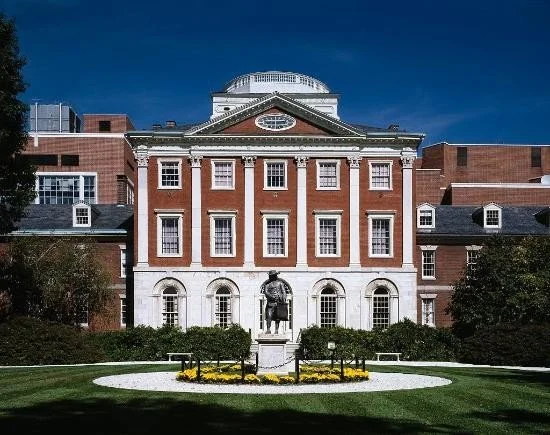
Pennsylvania Hospital, Philadelphia, PA (1756).
Located at 800 Spruce Street, Philadelphia, PA 19107, Phone 215-829-3000, Website www.pennmedicine.org/pahosp.
Founded in 1751, by Benjamin Franklin and Thomas Bond "to care for the sick-poor and insane who were wandering the streets of Philadelphia", and was the first hospital in the United States. It is also home to the first surgical amphitheater and first medical library in America. Today, the hospital is affiliated with the University of Pennsylvania Health System (Penn Medicine). The statue in front of the hospital building is of William Penn. The chief accomplishment of Dr. Rush as a physician was in the practice of bleeding the patient. It was said that he considered bleeding to be a cure for nearly any ailment. Even when the practice began to decline, he refused to reconsider its dangers.