Edward Rutledge
BORN - November 23, 1749, in Charleston, SC. Parents (Irish and English ancestry) - John Rutledge (b1713-d1750) and Sarah Boone Hext Rutledge (b1724-d1792). Seven Children (all seven living to adulthood) – John Rutledge, Jr. (b1739-d1800), Andrew Rutledge (b1740-d1772), Sarah Rutledge Mathews (b1742-d1819), Thomas Rutledge (b1743-d1783), Mary Rutledge (b1747-d1832), Edward Rutledge (b1749-d1800), Hugh Rutledge (b1750-d1811).
DIED - January 23, 1800 (age 50), in Charleston from a stroke. Religion – Anglican / Episcopalian. Buried - Saint Philip’s Churchyard Cemetery in Charleston, SC.
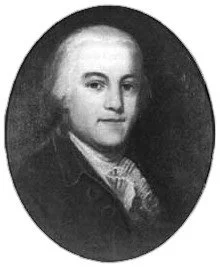
APPEARANCE – The picture above is the portrait of Edward Rutledge painted by 1873, by Philip F. Wharton in 1873 based on an earlier painting by , after James Earl. Above the medium size, fair complexion, intelligent and benevolent. An orator with power and eloquence, and a “genial and charming gentleman”, orator.
FAMILY - Married - Henrietta Middleton (b1750–d1792) in 1774. Four Children (three surviving to adulthood) – Henry Middleton Rutledge (b1775-d1844), Jackson Middleton Rutledge (b1777-d1830), Edward Rutledge, Jr. (b1778–d1780, age 2). Sarah Rutledge Huger (b1782–d1855), Wife Henrietta died in 1792, Married - Mary Shubrick Eveleigh (b1754-d1837) in 1792. No Children.
OCCUPATION – LAWYER, LEGISLATOR, SOLDIER, SC GOVERNOR. Graduated from the Temple Law School in London in 1767. Established a law practice in Charleston, SC in 1773, with his partner, Charles Cotesworth Pinckney. Member of the Continental Congress representing South Carolina from 1774 to 1776. Governor of South Carolina from 1798 until his death in 1800. One of the Founders of the College of Charleston.
AT SIGNING – Age 26 at signing. Youngest of the 56 signers. First to sign the Declaration of the four member delegation from South Carolina.
AFTER SIGNING – Attended the Staten Island Peace Conference with Benjamin Franklin, John Adams and the British on September 11, 1776. Served as an artillery officer in the SC Militia. Fought at the Battle of Port Royal in 1779. Served in the defense and siege of Charleston in 1779 to 1780. After the city’s fall, he was captured and imprisoned on a ship at St. Augustine, FL, from May 1780 to June 1781. Released in a prisoner exchange.
HISTORIC SITES
Charleston Home – Governor’s House InnouHH, Charleston, SC (1760). Located at 117 Broad Street, Charleston, SC 29401, Phone 843-720-2070, Website www.governorshouse.com. Home of Edward Rutledge from 1776 until his death in 1800.
Gravesite - Saint Philip’s Churchyard Cemetery in Charleston, SC. Located at 142 Church Street, Charleston, SC 29401, Phone 843-722-7734, Websitewww.stphilipschurchsc.org.
Brother’s Home – John Rutledge House Inn, Charleston, SC (1763). Located at 116 Broad Street, Charleston, SC 29401, Phone 800-476-9741, Website www.johnrutledgehouseinn.com. Home of Edward’s older brother, John who was a Signer of the U.S. Constitution. It is located across the street from Edward’s house.
Courthouse – Charleston County Courthouse, Charleston, SC (1792). Located at 100 Broad Street, Charleston, SC 29401, Phone 843-958-5000, Website www3.charlestoncounty.org. The Courthouse was built on the site of and incorporated the ruins of the original South Carolina Statehouse, which was built in 1753 and burned 1788, leaving only the foundation, walls and doorways. Designed by James Hoban, it is believed to be a forerunner of the architecture of the White House in Washington, DC.
Battlefield – Battle of Port Royal, Beaufort, SC (1779). Located near the Atlantic coast, 75 road miles southwest of Charleston, SC. A roadside historical marker reads – “BATTLE OF PORT ROYAL ISLAND – Near the Old Halfway House, in the vicinity of Grays Hill, on February 3, 1779, a force of South Carolina Militia, Continentals and Volunteers, including men from Beaufort, under General William Moultrie, defeated the British in their attempt to capture Port Royal Island.”
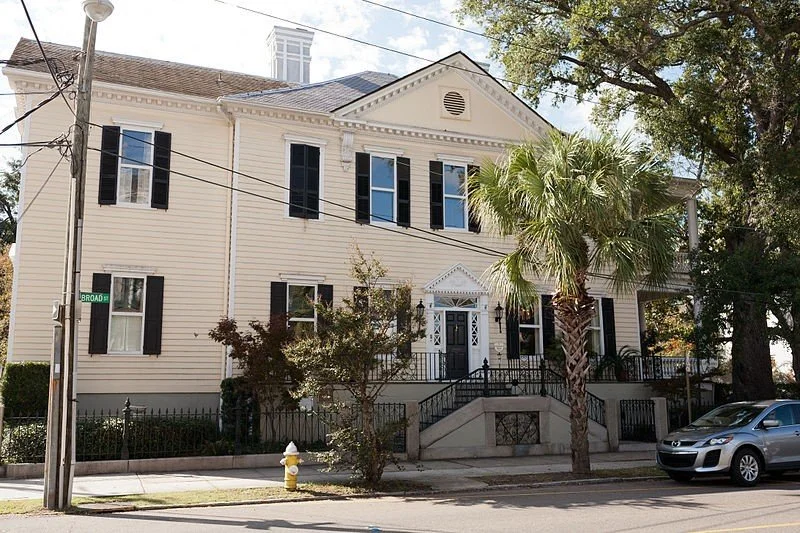

Home of Edward Rutledge, Governor’s House Inn, Charleston, SC (1760).
Located at 117 Broad Street, Charleston, SC 29401, Phone 843-720-2070, Website www.governorshouse.com. Privately owned.
Edward Rutledge and his family lived in the house from 1776 until his death in 1800. Today, the house serves as a bed and breakfast. It is called the Governor’s House Inn, because of Edward Rutledge’s service as governor of South Carolina.