George Clymer

BORN - March 16, 1739, in Philadelphia, PA. Parents (English ancestry) – Christopher Clymer (b1711-d1746) and Deborah Hardiman Fitzwater Clymer (b1712-d1740). Raised by his Uncle and Aunt – William and Hannah Coleman, after his parents died in the early 1740’s. Two Children – Elizabeth Clymer (___-d1740, as infant), George Clymer (b1739-d1813).
DIED - January 24, 1813(1813-01-24) (aged 73), at his home, Summerseat, in Morrisville, PA. Religion – Quaker / Anglican / Episcopalian . Buried – Friends (Quaker) Meeting House Burying Ground, Trenton, NJ, across the Delaware River from Morrisville, PA.
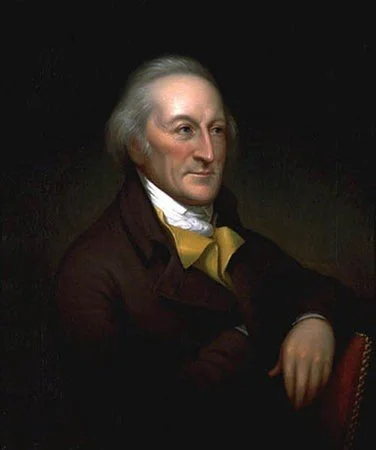
APPEARANCE – The picture above is the portrait of George Clymer (age 65 to 67) painted by Charles Willson Peale in 1807 to 1809. Quiet and unassuming, rarely spoke in Congress.
FAMILY – Married - Elizabeth Meredith (b1740-d1815) in 1765. Nine Children (five surviving to adulthood) – William Coleman Clymer (b1766-d1774, age 8), Henry Clymer (b1767-d1830), John Meredith Clymer (b1769-d1794), Margaret Clymer McCall (b1772-d1799), Elizabeth Clymer (b1774-___, died as infant), Julian Clymer (b1780-d1780, as infant), George Clymer (b1782-d1848), Reese Clymer (___, died as infant), Ann Clymer Lewis (b1784-d1810). Other – Possibly one or more children out of wedlock before or after marriage to Elizabeth.
OCCUPATION – MERCHANT, LEGISLATOR. Apprenticed as a Merchant, home schooled, avid reader. Member of the Continental Congress representing Pennsylvania from 1776 to 1782. Member of the Constitutional Convention in 1787, and was one of the 40 Signers of the Constitution. First Treasurer of the U.S. U.S. Congressman from Pennsylvania from 1788 to 1790.
AT SIGNING – Age 37 at signing.
AFTER SIGNING – Continued to service in Congress in Philadelphia until 1782. Spent heavily on the war from his personal fortune. Had to move several times during the war to avoid capture. His home in Chester County was ransacked in 1777, by the British on their way to Philadelphia following their victory at the Battle of Brandywine.
HISTORIC SITES
PA Home – Summerseat House Museum, Morrisville, PA (1765). Located at Hillcrest & Legion Avenues, Morrisville, PA 19067, on the overland route between Philadelphia and New York, Phone 215-295-1706, Website www.historicsummerseat.org. Home of George Clymer from 1806 to his death in 1813.
Gravesite - Friends (Quaker) Meeting House Burying Ground, Trenton, NJ. Located at East Hanover and North Montgomery Streets, Trenton, NJ 08608.
Monument – The Signers Statue, Philadelphia, PA. Located outside the Gilbert House at Signer’s Garden, 5th and Chestnut Streets, Philadelphia, PA. Inspired by George Clymer. It is a monument to all Signers of the Declaration of Independence , and the U.S. Constitution – both signed by Clymer.
Indiana, PA – The roadside historical marker reads – “INDIANA COUNTY (GEORGE CLYMER) – Formed March 30, 1803 from Westmoreland and Lycoming counties and once densely forested. Its name memorializes the first inhabitants. County seat, Indiana, was laid out in 1805 on land given by George Clymer, signer of the Declaration of Independence.”
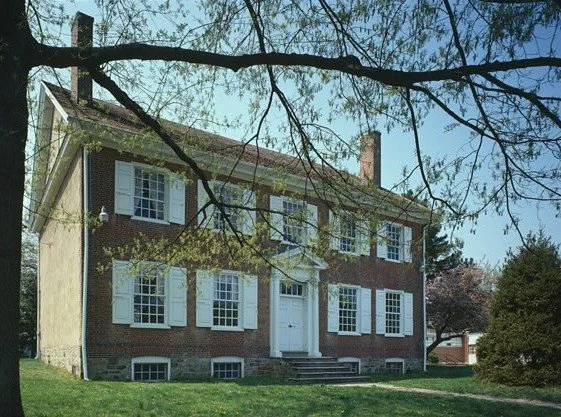
Home of George Clymer, Summerseat House Museum, Morrisville, PA (1765).
Located at Hillcrest & Legion Avenues, Morrisville, PA 19067, on the overland route between Philadelphia and New York, Phone 215-295-7339, Website www.historicsummerseat.org.
The roadside historical marker reads – “SUMMERSEAT – Washington’s headquarters in December, 1776, before Trenton campaign. Sometimes called the Barclay House. Robert Morris and George Clymer were among its owners. At Legion Ave. and Clymer St., next to the high school.” The house was owned by fellow signer, Robert Morris, from 1791 to 1798, in the town, Morrisville, which was named for him. It was purchased by George Clymer in 1806, who lived there until his death in 1813. It served as the headquarters for General George Washington from December 8 to 14, 1776, while planning the Army’s crossing of the Delaware River and attack on the Hessian soldiers in Trenton.