George Wythe

BORN – 1726, at the family’s Chesterville Plantation on the Back River in Elizabeth City County (now Hampton), VA. Parents (English ancestry) – Thomas Wythe III (b1690-d1729) and Margaret Walker Wythe (b1691-d1746). Three Children – Thomas Wythe IV (b1722-d1755), George Wythe (1726-1806), Anne Wythe Sweeney (___). He was raised by his mother with the help of his older brother, Thomas IV.
DIED - June 8, 1806 (age 80) in Richmond, VA. Religion – Anglican / Episcopalian. Buried - Churchyard at the St. John’s Episcopal Church in Richmond, VA. He was poisoned with arsenic by Wythe's sister's grandson, 17 year old George Wythe Sweeney, who was living with Wythe and was an heir to his estate.
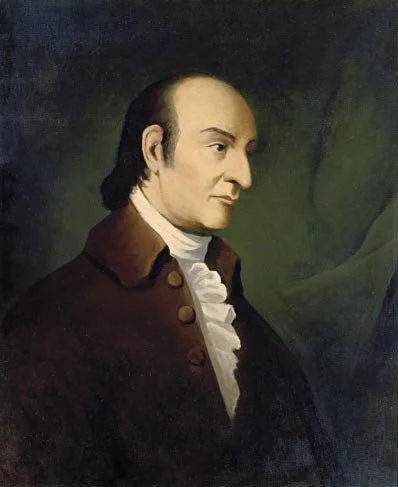
APPEARANCE - The picture above is the portrait of Georg Wythe (age 65) painted by William Crossman in 1927, from a sketch made by John Trumbull in 1791. Medium height, well proportioned, hooked nose, blue eyes, high forehead and arched brows, unostentatious in appearance and habits, polite and courteous in address, solemn and serious demeanor. Ate sparingly, eventually adopting a nearly exclusive vegetarian diet, drank wine moderately and kept a rigid schedule of work and studies.
FAMILY – Married - Ann Lewis (b1726-d1748) in 1747. No Children. She died eight months later. Married- Elizabeth Taliaferro (b1725-d1787) in 1755. Possibly One Child - One daughter who died as an infant.
OCCUPATION – LAWYER, TEACHER, LEGISLATOR, JUDGE. His mother educated him in the classics. Probably attended grammar school in Williamsburg. He was later known as “The Walking Library.” Established law practice in Spotsylvania County, VA in 1746. Returned to Williamsburg after his wife, Ann died. Became a member of the faculty of the College of William & Mary in 1758. Taught and was a mentor to Thomas Jefferson, John Marshall, Henry Clay and other men who became American Patriot leaders. Member of the Continental Congress representing Virginia from 1775 to 1777. Member of the Constitutional Convention from in 1787, and was one of the 40 Signers of the U.S. Constitution. Moved to Richmond, VA in 1791 to serve as a Judge.
AT SIGNING – Age 50 at signing. Some believe that he was the first to sign the Declaration of the seven member delegation from Virginia, because his name at the top. He was actually the last. He was in Williamsburg conducting State legislative business when the Declaration began to be signed on August 2 and did not arrive back in Philadelphia until late September. When he went to sign all of the other six delegates from VV had already signed and there was no space at the bottom of the list. However, there was space above the other VA signatures, possibly left for him by his previous student and author of the Declaration - Thomas Jefferson.
AFTER SIGNING – Continued to serve in Congress in Philadelphia until 1777. Remained at his home in Williamsburg during the remainder of the war, exposed at times to capture by the British.
HISTORIC SITES
Williamsburg Home – George Wythe House Museum, Williamsburg, VA (1755). Located at 101 S Henry Street, Williamsburg, VA 23185, on the Palace Green, Phone 757-229-1000, Website www.colonialwilliamsburg.com. George Wythe lived in the house from 1755 to 1791.
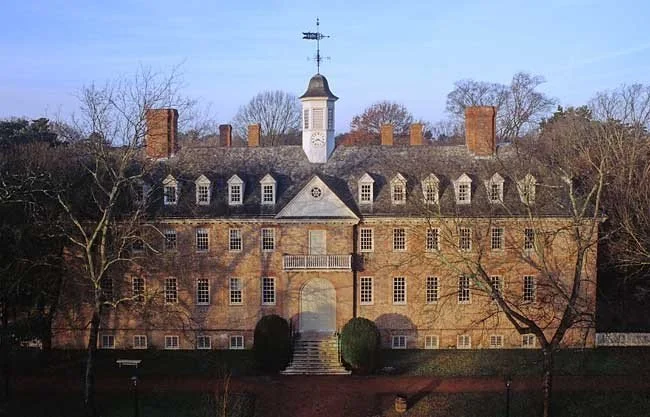
College – Wren Building, College of William and Mary, Williamsburg, VA (1700). Located at 102 Richmond Rd Williamsburg, VA 23185, Phone 757-221-4000, Website www.wm.edu. George Wythe taught at the college.
Gravesite – St. John’s Episcopal Church, Richmond, VA (1741). Located at 2401 East Broad Street, Richmond, VA 23223, Phone 804-649-7938, Website www.saintjohnsrichmond.org. Wythe was a member of the church while living in Richmond from 1791 until his death in 1806.
Chesterville – Chesterville Plantation, Hampton, VA (1691). Site of house is located in a grove near the junction of Virginia State Routes 27 and 172 in Hampton, VA. The family plantation inherited by Wythe in 1755 and operated by him until the 1790’s. The house burned in 1911 and the brick foundation remains.
Church – Bruton Parish Episcopal Church, Williamsburg, VA (1715). Located at 331 West Duke of Gloucester Street, Williamsburg, VA 23185, Phone 757-229-2891, Website www.brutonparish.org. Wythe was a member of the church while living in Williamsburg, VA.
Capitol – Capitol Building, Williamsburg, VA (1753 - Reconstructed). Located at the east end of the Duke of Gloucester Street, Williamsburg, VA 23185. Seat of the Virginia Legislature from 1753 to 1779, when the VA Capital was moved to Richmond.
Wren Building, College of William and Mary, Williamsburg, VA (1700).
Located at 102 Richmond Road, Williamsburg, VA 23185, Phone 757-221-4000, Website www.wm.edu.
Founded in 1693, the College of William and Mary is the second oldest institution of higher learning in the U.S., after Harvard. The Wren Building is the signature building of the college and is the oldest academic structure still in use in America. George Wythe, Thomas Jefferson, James Monroe, John Tyler, and John Marshall studied in its rooms. George Washington was once chancellor of the college. The building was destroyed by fire three times and its appearance was often changed. It was the first major building restored by John D. Rockefeller Jr., after he began Williamsburg’s restoration in the late 1920s and it stands today much as it appeared by 1732.
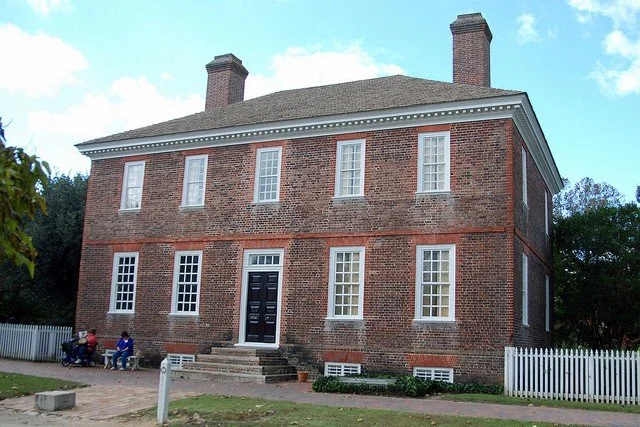
George Wythe House Museum (1755).
Located at 101 South Henry Street, Williamsburg, VA 23185, on the Palace Green, Phone 757-229-1000, Website www.colonialwilliamsburg.com.
The house and outbuildings were built by Planter Richard Taliaferro, for his daughter, Elizabeth and husband George Wythe. Much of the house is original. Wythe lived in the house from 1755 to 1791, when he moved to Richmond to serve as a Judge. In 1776, the house was the residence of Virginia General Assembly delegate Thomas Jefferson and his family. In 1781, the house served as General George Washington's headquarters before the British siege of Yorktown. In 1782, French General Rochambeau made the home his headquarters after the victory at Yorktown.
Note – George Wythe never actually owned the Wythe House. He and Elizabeth were given “life rights” to the house. They could live in the house “during their lives, and the life of the longest liver of them…” If they had children, the house would go to them. If not it would go back to the Taliaferro family.