Thomas Heyward, Jr

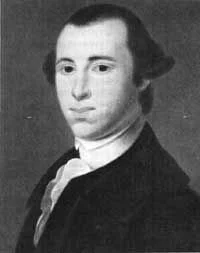
BORN – July 28, 1746, in Old House, St. Luke’s Parish, near Beaufort, SC. Parents (English ancestry) - Daniel Heyward (b1720-d1777), Maria Miles Heyward (b1727-d1761). Six Children – Thomas Heyward, Jr. (b1746-d1809), Nathaniel Heyward (b1748-d1753, age 5), Maria Heyward (___), Daniel Heyward, Jr. (b1750-d1778), Hester Heyward (b1751-___), William Heyward (b1753-d1786), Wife Maria died in 1761. Married – Jane Elizabeth Gignilliat Heyward (1743-1770) in 1763. Children – James Heyward (___), Nathaniel Heyward (b1766-d1851), Maria Heward Brailsford (___). Wife Jane died in 1770. Married – Elizabeth Simons Heyward (___) in 1771. Two Children – Elizabeth Heyward (___), Benjamin Heyward (___).
DIED – March 6, 1809 (age 62), at his home in St. Luke’s Parish, SC. Religion – Anglican / Episcopalian. Buried - Family cemetery at his home at Old House.
APPEARANCE – The picture above is a portrait of Thomas Heyward was painted by Charles Fraser prior to 1851 based on an earlier Jeremiah Theus. Small size.
FAMILY – Married - Elizabeth Matthews (b1753-d1782) in 1773. Six Children (one surviving to adulthood) – Daniel Heyward b1774-d1796), Marie Heyward (b1775-d1776, age one), Joseph Johnson Heyward (b1777-d1853), Thomas Heyward #1 (b1779-d1779, in infancy), John Heyward (b1779-d1779, in infancy), Thomas Heyward #2 (b1782-d1782, in infancy). Wife Elizabeth #1 died from childbirth in 1782. Married – Elizabeth Savage (b1770-d1833) in 1786. Three Children – Thomas Heyward (b1789-d1829), James Hamilton Heyward (b1792-d1828), Elizabeth Savage Heyward Parker (b1794-d1852).
OCCUPATION – LAWYER, PLANTER, LEGISLATOR, SOLDIER, JUDGE. Graduated from the Temple Law School in London. Established a law practice in Charleston, SC. Built a plantation called White Hall. Member of the Continental Congress representing South Carolina from 1776 to 1778. Appointed a circuit Judge in 1778. One of the Founders of the College of Charleston.
AT SIGNING – Age 29 at signing.
AFTER SIGNING – Continued to serve in Congress in Philadelphia until 1778. Served as an artillery officer in the SC Militia. Wounded during the successful Battle of Port Royal in 1779. Served in the defense of Charleston in 1779 to 1780. After the city’s fall, he was captured and imprisoned on a ship at St. Augustine, FL, from May 1780 to June 1781. Released in a prisoner exchange. The British raided his plantation, burning White Hall and taking his 130 slaves for sale to the sugar plantations in Jamaica.
HISTORIC SITES
Charleston Home – Heyward-Washington House Museum, Charleston, SC (1772). Located at 87 Church Street, Charleston, SC 29403, Phone 843-722-0354, Website www.charlestonmuseum.org/heyward-washington-house. The house was built for Thomas Heyward Jr. by his father.
Gravesite – Old House, Heyward Family Cemetery. Located 100 yards east of SC Route 462, immediately south of the intersection of Routes 462 and 336, near Ridgeland, SC, and the nearest exit off I-95 is Exit 21. The nearby roadside historical marker reads – “TOMB OF THOMAS HEYWARD, JR. – 1746-1809 – Member of the South Carolina Provincial Congress and Council of Safety and of Continental Congress. Signer of the Declaration of Independence and Articles of Confederation and captain of militia at Battle of Port Royal and Siege of Charleston. Prisoner of war 1780-1781. Circuit Court Judge 1778-1789.” The ruins of the Old House Plantation house, which was burned by Union soldiers in 1864, are nearby and can be seen.
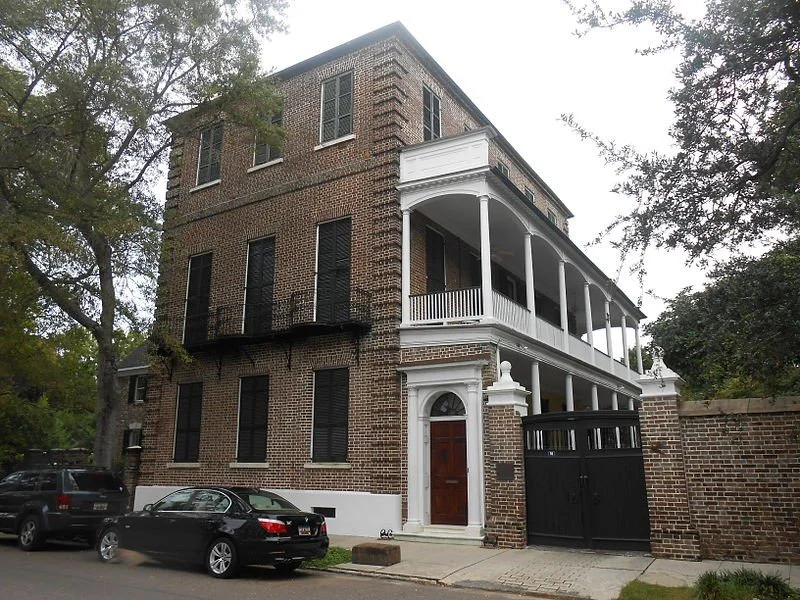
Heyward-Washington House Museum, Charleston, SC (1772).
Located at 87 Church Street, Charleston, SC 29403, Phone 843-722-0354, Website www.charlestonmuseum.org/heyward-washington-house.
The house is located in the downtown Charleston Historic District within the area of the original walled city. Rice planter Daniel Heyward built the house in 1772 for his son, Thomas Heyward, Jr. In May 1791, the city rented the house for the use by George Washington during his week-long stay. Since then the house became traditionally known as the “Heyward-Washington House.” Other buildings on the site include the carriage shed, with an 18th-century well just beneath, and the kitchen building constructed in the 1740’s which is the only preserved kitchen of its time open to the public in Charleston, which was constructed in the 1740’s.