William Paca

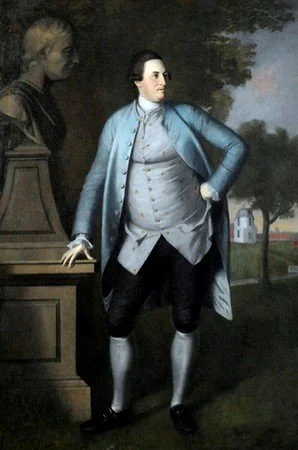
BORN - October 31, 1740, at Chilbury Hall near Abingdon, now Harford County, MD, north of Baltimore near the Chesapeake Bay. Parents (Italian and English ancestry) - John Paca (b1712–d1785) and Elizabeth Smith Paca (b1715-d1758). Eight Children – Mary Paca (b1733-d1781), John Paca (b1735-d1795), Aquila Paca (b1738-d1787), William Paca (b1740-d1799), Elizabeth Paca (b1742-d1758, age 16), Martha Paca Phillips (b1743-d1829), Frances Paca Dallam (___-d1787), Susanna Paca Smith (b1753–d1796).
DIED – October 13, 1799(1799-10-23) (age 58), at Wye Hall on Wye Island across the narrows from his own home, Wye Plantation in Queen Anne’s County, MD. Religion – Anglican / Episcopalian. Buried - Family cemetery near the Wye Plantation, Queen Anne’s County, MD.
APPEARNACE – The picture above is the portrait of William Paca (age 31) painted by Charles Willson Peale in 1772. Peale described Paca as “He was a handsome man, more than 6 feet high, of portly appearance, being well educated and accustomed to the best company, (William Paca) was graceful in his movements and complaisant to everyone; in short, his manners were of the first polish. In the early period, when the people’s eyes first became opened to their rights….(he) made the first stand for the independence of the People.” Quiet man, preferred to write newspaper articles and work behind the scenes.
FAMILY – Married - Mary (Molly) Lloyd Chew (b1736-d1774, in childbirth with third child) in 1763. Three Children (One surviving to adulthood) – Henrietta Maria Paca (b1764, died as infant), John Philemon Paca (b1771-d1840), William Paca (b1774-d1779, age 5). Wife Molly died in 1774. Two “natural” (illegitimate) daughters with Companion -Levina (___-d1780) in Philadelphia, PA – daughter Hester (b1775-d1793), and Companion - Sarah Joyce (___-d1803) in Annapolis – daughter Henrietta Maria (Joice) (b1777-d1850). Married - Ann Harrison (b1757-d1780, in childbirth with Henry) in 1777. One Child – Henry Paca (b1778-d1781, age 3). John Philemon Paca was the only surviving legitimate heir was John Philemon Paca. “Philemon” is the name of a book in the Bible.
OCCUPATION – LAWYER, PLANTER, LEGISLATOR, JUDGE. Graduated from the College of Philadelphia (now University of Pennsylvania) in 1759, and the Middle Temple Law School in London. Established a law practice in Annapolis, MD in 1764. Member of the Continental Congress representing Maryland from 1774 to 1779. Governor of Maryland from 1782 to 1785. Judge of the U.S. Court of Maryland from 1788 until his death in 1799.
AT SIGNING – Age 35 at signing.
AFTER SIGNING – Continued to serve in Congress in Philadelphia until 1779. Appointed as a judge to maintain stability on the Eastern Shore due to outbreaks of treason and insurrections. Spent heavily on war from his personal fortune. Proposed a Bill of Rights along with James Madison as part of the U.S. Constitution to include – freedom of religion, freedom of the press, legal protection of citizens accused of crimes. Member of the Society of the Cincinnati.
HISTORIC SITES
Annapolis House – William Paca House and Garden, Annapolis, MD (1765). Located at 186 Prince George Street, Annapolis, MD 21401, Phone 410-267-8146, Website www.annapolis.org. Home of William Paca from 1765 to 1780.
MD Home & Gravesite – Wye Hall Plantation (1765). Located in Queen Anne’s County on the Eastern shore a few miles north of Easton, MD. Home of William Paca until his death in 1799. Many of Paca’s possessions were lost in a major fire in 1879. Privately owned.
Meeting Place – Georgian House Bed and Breakfast, Annapolis, MD (1747). Located at 170 Duke of Gloucester Street, Annapolis, MD 21401, Phone 410-263-5618, Website www.georgianhouse.com. Place where Colonial legislators often met including William Paca, Samuel Chase and Thomas Stone.
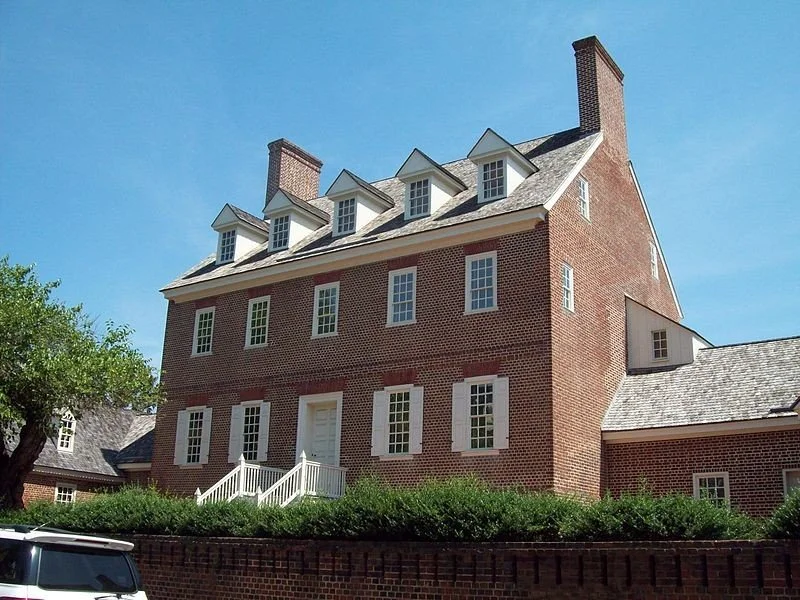
William Paca House and Garden, Annapolis, MD (1765).
Located at 186 Prince George Street, Annapolis, MD 21401, Phone 410-267-8146, Website www.annapolis.org.
The pre-Revolutionary War British town house was largely designed by William Paca (pronounced Pay-ca), himself. He sold the house in 1780, when he moved to his Wye Hall Plantation on the Eastern Shore of Maryland. In the early 1900’s the house and a building on the backside served as the Carvel Hall hotel. In the 1970’s the building on the back was demolished and the house and two acre walled garden, which includes a two-story summer house, was restored to its original state. Today, the house and gardens bear a resemblance to the Governor’s Palace in Williamsburg, VA.